NEPTUNE'S NAVY TO THE RESCUE
- Isabella Cavalletti
- Jan 20, 2024
- 9 min read

Three months ago, I boarded a Sea Shepherd ship, the Sea Eagle, in Paola, Calabria, in southern Italy.
Sea Shepherd Global is an NGO that protects wildlife and combats illegal fishing in direct-action campaigns around the world. You might have heard of them as the good pirates of the sea. Today its fleet, also known as Neptune’s Navy, is made up of eight refurbished fishing vessels a one custom-built ship, each one is crewed by volunteers that share a deep love for the ocean and defending its voiceless creatures.
I had traveled by train from Florence and by the time I made it to the ship it was nightfall, past dinner time. Most of the crew was already asleep but the First Officer, Yuval Elroy, had stayed awake to greet me and offer me some delicious vegan food. As I ate, we got to know one another, and towards the end of our conversation, I asked Yuval what was the plan for the following day?
“Removing longlines from dawn ‘til dusk.”
For the last six years Sea Eagle’s Operation Siso has been focused on removing abandoned or illegal longlines, octopus traps and FADs (fish aggregating devices) from the Mediterranean. Since its inception the campaign has decreased illegal fishing in Calabria by 70 percent. When I boarded the crew was searching for longlines, a very harmful method of fishing, where floating nylon lines connect a buoy to the seabed with several hooks and baits attached to it. Once attached fishers go and check, every once in a while, to see whether a swordfish has taken the bait. About 300,000km of abandoned longlines are currently floating in the Mediterranean, which is the same distance between the Earth and the Moon. As a result, the population of swordfish in the Med has decreased by 90 percent. Every day, the deck crew on board the Sea Eagle work tirelessly to remove thousands of abandoned longlines that, despite not being in use, still catch hundreds of marine wildlife as bycatch.

The following morning, the core team met at 7:30am on the bridge where the Captain suggested the plan for the day as well as locations of possible abandoned longlines, then everyone flocked to the dining room to share a nutritious vegan breakfast. Apart from the core team, everyone else onboard are volunteers — from the oiler to the deckhands, the cook and the photographers — exchanging their time and work for food, shelter and an experience out at sea. After breakfast, everyone dissipated to their respective work areas and the day began. It felt as though every crew member has an important role to play to keep the ship afloat and its community safe and healthy, just like a buzzing hive, where each working bee is aware of where they have to be and what they have to do to ensure smooth sailing.
We set sail in search of longlines. Once we anchored, I joined the deckhands pulling longlines out of the water on the bow. Finally, I had a longline in my hands, actually touching what had been an abstract fishing method until now. Only twenty minutes into pulling, we found a dead swordfish.

There’s a conceptual dilemma in ocean conservation that is referred to as the “out of sight, out of mind” problem. Arguably, only a tiny fraction of the world’s population has a direct relationship with the ocean and an even smaller number has actually spent time out at sea. This is exactly why the fishing industry — which now numbers over four million vessels — can get away with destructive methods of fishing: nobody sees what they’re up to, except for the volunteers of Neptune’s Navy.
After spending the morning working on the deck, I approached Yuval and asked her about her experience in several Sea Shepherd ships. Over the past six years, she has worked with Sea Shepherd in almost every ocean: the Sea of Cortez in Mexico, the Southern Ocean of Antarctica, the Atlantic near West Africa, the Pacific near Latin America, and the tranquil blue Seas of the Mediterranean and the Caribbean. I asked her what have been the most intense operations she has worked on?

“When I was working on the campaign in Peru, all the time I kept thinking this is so far away from the public eye, I can't believe that I'm witnessing this brutality. I couldn't believe the amount of fishing vessels, probably more than many other countries combined. In Peru fishers are mostly looking for tuna. I remember being on watch and at some point our radar was packed with vessels coming in and out to sea, at least a few times a day. Each time they were probably taking between 200 to 300 tonnes of fish. That coast has a huge population of seals, and of course they were attracted to the tuna the fishers were catching, and they just kept coming in until there were thousands of them, and they were constantly getting caught in those nets. I remember looking with the binoculars and watching them trying to escape from the fishing nets, their heads popping out of the water under the black nets, trying to find a way out that they will never find, because that's it, it's over. And all of this is just because the fishing industry gets away with killing thousands of other animals as bycatch. Few people realise how much damage they’re truly causing.”
Bycatch is a term used to describe animals that are not intended to be caught by that fishing operation. An estimated 300,000 cetaceans and 500,000 turtles are killed each year in unintentional entanglements, but the real number is probably higher.
Where else did you see a lot of bycatch? I asked.
“While in Mexico during Operation Milagro, patrolling the Sea of Cortez, when we were out spotting gillnets.”
Gillnets are another destructive method of fishing, they look like floating curtains that are anchored to the seabed and attached to buoys on the surface. They entangle anything that tries to swim through it, from small juvenile fish to whales.
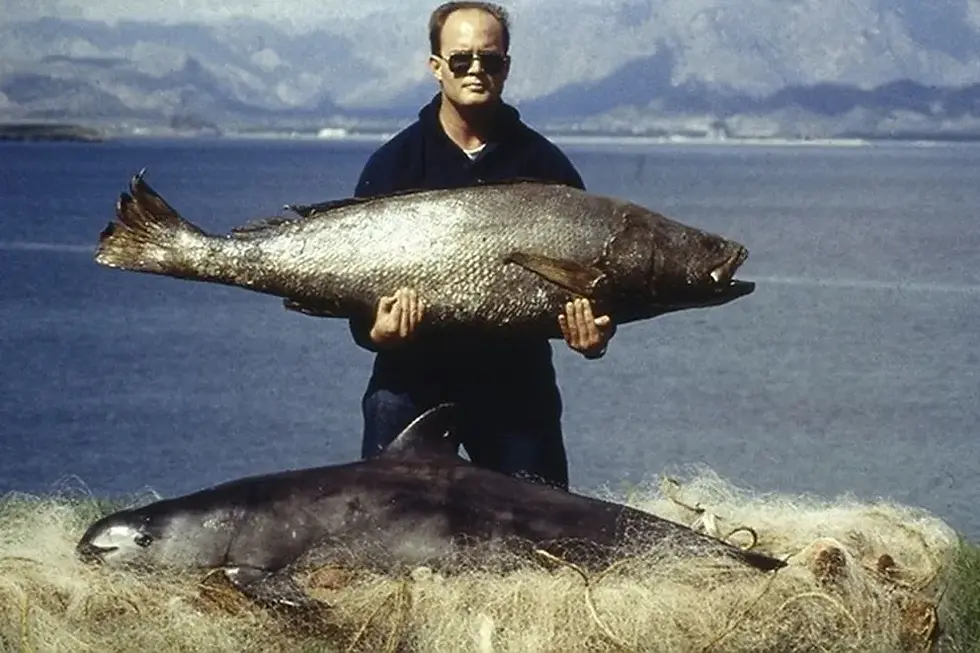
“Those nets were full of marine life, as the Sea of Cortez is known to be as the aquarium of the world. It is just so rich, it’s teeming with life. Every night that we were pulling in nets we found tens of caught marine animals. Sometimes we would pull those nets and we could tell that those carcasses had been there for a long time. Probably the fishers took what they needed, which was the bladder of the totoaba, and just left. It’s frustrating because they don’t clean up after, it shouldn’t be the end for more animals, but the nets become ghost nets and keep killing. Every day we pulled between 10-14 nets. When we’d find a dead animal we’d put the carcass in a tarp in the bow of the ship. I remember one day that tarp had about 20 stingrays.”
In Chinese medicine, the swim bladder of the totoaba fish is thought to cure ailments. Due to overfishing the totoaba can’t be found anymore in Chinese waters, increasing the price of one bladder to nearly $20,000 - $80,000 per kg. In Mexico, the intense fishing of the totoaba with gillnets has caused the quick decline of the world’s smallest cetacean, the vaquita.
Technically, since 2017, the use of gillnets has been banned in Baja California in an effort to save the elusive vaquita porpoise. However, laws out at sea are hard to enforce, which is why Sea Shepherd works with local authorities to support the enforcement of fishing regulations and apprehend illegal fishers. Sea Shepherd’s presence in Mexico has encouraged more regulation in the sector, as they have provided strong evidence against destructive forms of fishing. Last October, Sea Shepherd managed to secure an agreement with the Mexican government to help expand the protection area for the vaquita porpoise and therefore expand the area where they can patrol and operate. I asked Yuval, where else has Sea Shepherd successfully worked with local law enforcement?
“In West Africa we collaborated quite closely with the local governments: we provide the ship, the crew, the fuel, and the country will provide the local authorities to make all the required inspections and investigations that are needed to tackle and eventually apprehend illegal fishing operations in the water. With each operation we are showing the area that illegal fishing is not tolerated, giving the fish and the animals and the ocean the opportunity to thrive again.”
So what happens when you find an illegal fishing vessel?
“When we find a ship suspected of illegal activity, we board with the local authorities to begin the inspection. Usually our field medic will also join as workers’ conditions on these ships are horrible, they lack basic safety gear and hygiene. So the first thing our medic does is to treat wounds, infections and cuts — many fishers are not even allowed to leave the ships, there’s a lot of forced labour out at sea, essentially modern day slavery. Then our media team joins us to capture footage as evidence of what is happening onboard. What is really shocking to witness is how much bycatch is caught in these fishing vessels that just goes to waste. For example, we’ve found shrimp boats that throw away 90 percent of their catch, hundreds of fish and marine life are just thrown overboard, it makes no sense.”
Shrimp trawlers are notorious for having the worst bycatch ratio, the standard amount is shocking: for every pound of shrimp caught, six pounds of bycatch is thrown overboard, including sharks, turtles and rays. In September 2021, during Sea Shepherd's Operation Albacore, a trawler was arrested in Gabon that had an even worse ratio of 0.2% shrimp to 99.8% bycatch. Gabon’s Minister of Fisheries Maganga-Moussavou was present during the arrest and was completely dumbfounded by the waste:
“It was important for me to see firsthand the impact of the shrimp fishery off Gabon’s coast. These wasteful practices cannot be tolerated in Gabon. I have commissioned an official inquiry into the shrimp fishery and pending the outcome of the investigation, I am prepared to suspend the fishing season until a solution can be found to the bycatch problem.”
Yet 65 percent of the world’s seas don’t fall under any jurisdiction, the high seas or Antarctica are no man’s land, places where Sea Shepherd can’t apprehend vessels with local authorities. In those areas their strategy is different. Last winter, Neptune’s Navy’s newest addition, the Allankay, headed to the Southern Ocean for Operation Antarctica Defense to document the fishing industry’s furthest endeavour, supertrawlers catching krill. Yuval was onboard.
“There are several supertrawlers that are out there looking for krill, and one of the biggest challenges in Antarctica is that this is perfectly legal, because they are licensed by the Commission for the Conservation of Antarctic Marine Living Resources (CCAMLR). So the best thing we can do is to go down there and just do a lot of documentation and show the world what happens when they choose to consume krill.”

In the last five years, krill fishing has increased five times. Krill are vital for the survival of the Antarctic ecosystem. As a keystone species they are the main source of food for whales and penguins. In early 2023, the Bob Brown Foundation joined the Sea Shepherd’s Antarctica campaign to dive deeper into this topic. Their research shows that one supertrawler catches around 50 tonnes of krill per day, that’s enough to feed 30 whales.
“Mainly, krill is used for the colouring of salmon in fish farms or it’s used for omega 3 supplements. I think few people are realising how much this industry is decimating Antarctica’s marine life. This is a marine area that is so rich with life, whales, seals, truly the last wilderness on Earth. Yet these supertrawlers are huge, huge floating factories, and they are literally taking food away from those animals' mouths.”
Technically, the CCAMLR is also supposed to protect Antarctica's wildlife and nature. Last year, the krill industry was directly lobbying CCAMLR in an effort to increase their yearly catch allowance. Thanks to the Bob Brown Foundation’s report and Sea Shepherd documentation of Antarctica’s destruction, the CCAMLR rejected the krill industry’s request, a win for the whales and the world.
It was another success for the replicable system that Sea Shepherd has created, which can actually protect the ocean from its worst enemy: industrial fishing. Sea Shepherd’s campaigns support local law enforcement, encourage more regulation, deter illegal fishing activities all while showing the world what is happening out of sight and out of mind on the High Seas. One could say that they’re the much needed eyes watching our oceans. This has made Yuval, along with the rest of Neptune’s Navy, a key witness of the fishing industry’s shady and murky business: from slavery, to absurd amounts of bycatch and destructive and senseless methods of fishing in giant floating factories. The sad reality of how the fishing industry operates is miles away from their idealistic marketing image of a fisherman with his rod.

Thanks to this passionate and global community of volunteers, the oceans and its creatures finally have some protection. After four days, I disembarked the Sea Eagle with a heart full of hope and admiration for this floating crew of dedicated activists.
This story was originally written for eco-nnect.com by Isabella Cavalletti


UU88 dạo này thấy mọi người nhắc hoài nên mình cũng bấm vào xem thử cho biết, kiểu tò mò giao diện thôi chứ không ngồi tìm hiểu sâu. Lướt một vòng thấy trang làm khá “dễ thở”, nhìn vào không bị rối mắt hay chữ nút chồng chéo. Mình thích nhất là cách họ chia nội dung theo từng khối rõ ràng, kéo xuống là nhận ra ngay đang ở phần nào, không phải căng mắt dò. Với lại cái menu đặt chỗ khá hợp lý nên chuyển qua lại vài mục nhanh, không bị lạc hay phải bấm lui tới nhiều lần. Nói chung cảm giác dùng nhẹ nhàng, hợp kiểu chỉ ghé xem nhanh như mình, nhất…
BoConcept is a Danish furniture brand known for its clean lines, functional layouts, and thoughtful approach to modern living. Among Indian homeowners looking for luxury sofa design, BoConcept has become a name associated with understated elegance and everyday comfort. Each piece is designed in Denmark, reflecting decades of Scandinavian craftsmanship and a strong focus on customisation, allowing customers to choose fabrics, finishes, and configurations that suit their space. Beyond sofas, the brand offers a wider range of furniture and home accessories built around minimalist aesthetics and practical living. It's a good starting point for anyone comparing styles before making a decision.
Muy buen sitio de letras bonitas, con estilos modernos, elegantes y fáciles de utilizar. También uso https://letrasbonitass.com.mx/
Khi dành thời gian theo dõi cách nhiều nền tảng phát triển trải nghiệm người dùng, c168 cho mình cảm giác khá cân đối giữa bố cục và khả năng hiển thị thông tin. Những khu vực như game bài, xổ số, thể thao và nổ hũ được sắp xếp hợp lý nên việc tìm kiếm từng chuyên mục không mất quá nhiều thời gian. Mình thấy menu được xây dựng theo hướng trực quan, hỗ trợ quan sát nhanh và giảm thao tác khi chuyển đổi giữa các khu vực. Trong lúc trải nghiệm thử game bài và xổ số, tốc độ tải tương đối ổn định, phản hồi diễn ra khá mượt trên nhiều phiên truy cập, quá trình…
Có thời điểm mình trải nghiệm https://chuoichientv.live/ liên tục để theo dõi nhiều trận liền, mình thấy nền tảng vẫn giữ được độ ổn định cần thiết, giao diện không nhồi quá nhiều chi tiết nên việc quan sát lịch phát sóng trở nên nhẹ nhàng hơn, các khu vực World Cup, Euro và giao hữu quốc tế được tách riêng giúp người xem chọn nội dung nhanh, mình đánh giá cao cách trình bày này vì nó giảm cảm giác tìm kiếm thủ công, trong lúc trải nghiệm thì tốc độ tải đều, thao tác chuyển sảnh mượt nên cảm giác theo dõi liên tục không bị gián đoạn