Coral science is ready to act. It's time to push politicians.
- Helena Constela
- Jan 30
- 5 min read

Join our campaign Corals Without Borders.
This may sound like a bureaucratic glitch, but scientists can’t move coral genetic material between countries fast enough to save the reefs. Coral science is ready to act, and now i's time to push politicians.
While marine heatwaves decimate coral reefs across the planet, international law is failing to keep up. Coral scientists have developed tools to boost resilience against the climate crisis, including assisted gene flow (AGF), where coral sperm, eggs or fragments are exchanged to spread traits like heat resistance. But right now, international collaboration is bottlenecked by outdated trade restrictions, permitting nightmares, and a lack of global coral protocols.
Coral reefs are bleaching, collapsing, and vanishing, while legal borders are blocking the solutions.
If nothing changes, the most powerful tools in coral conservation will remain locked behind paperwork.
A patchwork of protection
Today, coral protection is left to individual countries, with wildly unequal results. Many coastal nations have enacted coral laws, but their strength varies.
For example, the US has a Coral Reef Conservation Act and even lists 25 coral species under the Endangered Species Act. Other countries rely on marine protected areas (MPAs) or specific bans on coral trade. And even many MPAs were drawn in remote areas, only the far-flung, “passively” protected reefs often get serious legal cover. In practice, this means most reefe, including those vital to dense coastal communities, lack firm legal safeguards.
There’s no global system for restoration, no standardised framework for genetic exchange, and no unified policy that treats coral as a planetary concern.
International treaties offer some framework (e.g. CITES licensing for coral trade, or the UN Convention on Biological Diversity), but none explicitly force nations to safeguard reef health beyond their own borders. A reef’s fate depends on its flag: country A may ban destructive fishing on its reefs, while country B’s reefs suffer unchecked. This patchwork leaves huge gaps and duplication, and no global “reef rescue” law, unlike the ozone treaty or whaling ban.
Climate chaos knows no borders
In the last two years, successive marine heatwaves have blasted coral systems from the Great Barrier Reef to Raja Ampat to the Caribbean. Scientists now say even isolated thermal refuges offer no sanctuary: ocean heating has “reached a level where there is no longer any safe harbour” from coral bleaching. As temperatures and ocean acidity rise everywhere, every reef is at risk.
We already feel some consequences: with reefs dying, coastal storm protection and fish nurseries vanish. Countries around the world (from island nations to wealthy exporters) all suffer. But efforts to counteract this, like coral nurseries, scientific breeding programs, reseeding reefs… run into legal roadblocks. For example, in 2023 researchers bred “Flonduran” corals by crossing Florida and Honduran corals, then outplanted the hybrids on the reef. This was the first ever cross-border coral restoration, but it required special permissions and took years of preparation.
Without international coral biobanks and clear protocols, such lifesaving moves remain the exception, not the rule.
Right now, rules akin to plant seed-exchange or human tissue banks do not apply to corals. The new Science policy forum on coral restorations calls for revising those rules: “adapting existing rules for the exchange of non-commercial plant exchanges among herbaria and nurseries so that they can be applied to corals; establishing regional land-based coral biobanks; and leveraging political networks among overseas countries and territories to enable timely, cross-border coral exchanges”.
In other words, science has the blueprint for global action, but politics has not caught up.

Lessons from global successes
We have faced urgent global environmental problems before, and found solutions only through collective action.
For decades, nations have met to save species and ecosystems beyond any one country. The 1986 global moratorium on commercial whaling is one example: seeing species crash, 88 nations agreed to a temporary ban, creating whale sanctuaries in the Southern and Indian Oceans. As a result, some whale populations are finally recovering.
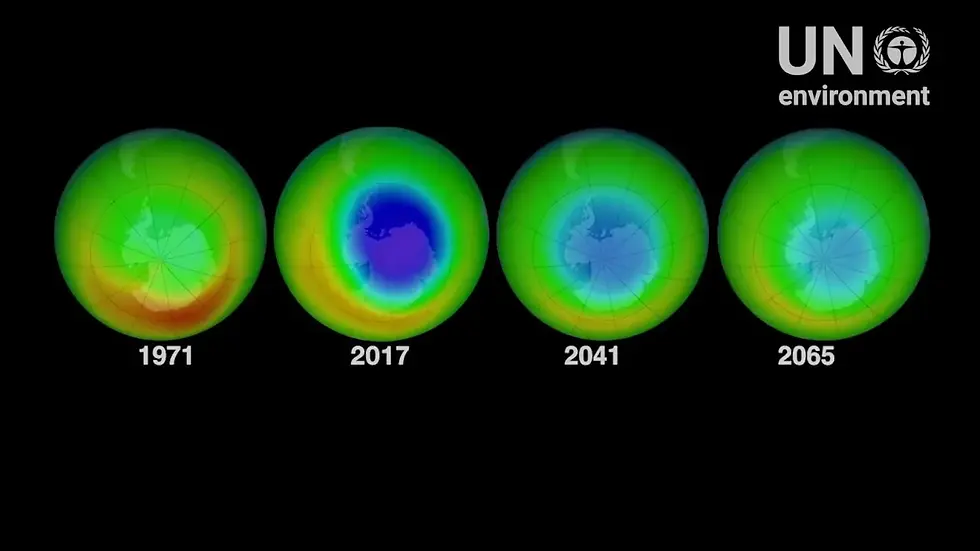
Similarly, the 1987 Montreal Protocol on ozone-depleting chemicals was ratified by every country, phasing out 99% of those substances and reversing ozone hole growth. This treaty is “widely hailed as the world’s most successful international environmental treaty”. It shows what we can do when we treat a crisis as a shared responsibility.
Now we need the same spirit for reefs. In 2023 nations completed the long-awaited High Seas Treaty to protect biodiversity beyond national waters, even creating marine protected areas on the open ocean. This fills a “blaring gap”: only about 1% of the high seas is currently protected. Likewise, dozens of countries (75% of reef nations) have pledged to double reef protections and invest in reef restoration under the International Coral Reef Initiative.
International cooperation can work for nature if we organize to make it happen.
Existing treaties can’t keep up
Corals fall through the cracks of global biodiversity treaties:
The Convention on Biological Diversity (CBD) encourages reef protection but has no binding enforcement and lacks specific coral protocols.
CITES controls coral trade but doesn’t distinguish clearly between commercial extraction and conservation transplants.
The Convention on Migratory Species (CMS) applies to animals like whales and turtles, not sessile reef-builders.
The International Coral Reef Initiative (ICRI), while influential, is not a treaty and has no legal authority.
In short: there’s no unified global regime for coral reefs. A reef’s survival still depends on where it sits on a map.
It's time to push politicians
Leading coral scientists, including those from the Coral Restoration Consortium and the Australian Institute of Marine Science, are calling on the UN Environment Programme (UNEP/PNUMA) to lead urgent reforms. They recommend:
Creating a multilateral coral conservation protocol to facilitate AGF and genetic transfers for conservation.
Establishing regional coral biobanks, with governance models similar to the Svalbard Global Seed Vault.
Revising CITES procedures to clearly distinguish non-commercial conservation translocations from trade.
Harmonising national policies to support cross-border reef restoration.
If UNEP takes leadership now, there is still a chance to mobilise science across borders, before coral extinction becomes inevitable.
What you can do
Raise awareness. SHARE this story. Use your voice to add pressure.
Join our campaign Corals Without Borders and send and email to the UN Environment Programme (PNUMA). Demand international leadership for coral rescue.
Support science. Fund biobanks, back coral research, and demand that reef-rich countries coordinate instead of compete.
Demand legal reform. Coral reefs don’t stop at borders. Laws shouldn't either.
This is about ecological survival. Coral science is decades ahead of coral policy, and reefs won’t wait. It’s time for a global coral conservation agreement.



GO88 dạo này thấy nhiều người nhắc nên mình cũng bấm vào xem thử cho biết, kiểu lướt qua giao diện thôi chứ không đăng ký hay chơi gì. Ấn tượng đầu là trang nhìn gọn gàng, không bị rối mắt như nhiều site khác, kéo xuống khá mượt. Mấy khối nội dung được chia tách rõ nên mình đọc lướt vẫn hiểu đang nói về phần nào, không phải căng mắt tìm. Có đoạn họ nhắc nhẹ tới Tài Xỉu với Nổ Hũ nên mình đoán là dạng cổng game, nhưng cách trình bày chữ vừa phải, không nhồi nhét. Mình thích nhất là tiêu đề để nổi bật, nhìn cái là biết đang ở mục nào, kiểu heading…
8xbet mình thấy mọi người nhắc hoài nên cũng ghé thử cho biết, kiểu vào xem trang chủ bố cục ra sao thôi chứ không có thời gian mày mò sâu. Ấn tượng đầu là giao diện nhìn khá “gọn”, màu sắc và chữ dễ đọc, kéo xuống không bị rối mắt. Mình có lướt qua phần giới thiệu thì thấy họ có nhắc chuyện là đối tác của Manchester City, đặt như một đoạn điểm nhấn nên người mới nhìn phát hiểu họ muốn nói gì. Menu để ngay chỗ dễ thấy nên bấm qua lại cũng nhanh, không phải tìm lâu. Nói chung cảm giác dùng ổn, kiểu trang được chia theo từng khối nội dung rõ ràng…
33win dạo này thấy nhiều người nhắc nên mình cũng tò mò vào xem giao diện ra sao thôi. Mình không đăng ký hay chơi gì, chỉ lướt vài phút cho biết. Cảm giác đầu tiên là trang nhìn khá sáng và dễ thở, không bị nhồi chữ hay màu mè quá. Mấy phần nội dung được chia thành từng khối rõ ràng nên kéo xuống là hiểu ngay đang xem mục gì, không phải đoán. Mình cũng để ý cái menu đặt khá dễ nhìn, bấm qua lại giữa các trang không bị loạn hay phải back liên tục. Nói chung kiểu trình bày gọn gàng nên người mới vào cũng không bị ngợp, nhất là mấy khung thông…
https://dn88t5.com/ mình ghé thử cho biết vì thấy bạn bè nói qua, kiểu vào xem giao diện có dễ dùng không thôi. Ấn tượng đầu là trang làm khá sạch sẽ, nhìn không rối, mấy mục chính đặt ngay trên nên khỏi phải kéo tìm nhiều. Mình dùng điện thoại thấy bấm qua lại ổn, chuyển trang nhanh, không bị đứng hay giật kiểu mấy site hay gặp. Có điểm mình để ý là phần nạp/rút họ ghi khá nổi, nhìn phát là thấy ngay, nên ai hay quan tâm khoản này chắc đỡ phải mò. Nói chung trải nghiệm lướt nhanh khá thoải mái, nhất là bố cục tối giản và các khối nội dung xếp gọn, dễ nhìn…
Winaz mình mới ghé thử vì thấy bạn bè nhắc hoài, kiểu tò mò xem trang bày biện ra sao thôi. Vào cái là thấy họ chia nội dung thành từng khối rõ ràng, nhìn không bị rối mắt hay dồn chữ quá nhiều. Mình có lướt qua phần giới thiệu, thấy họ ghi mốc ra mắt ở Việt Nam tầm T11 2025 và nói định hướng kiểu minh bạch, nạp rút nhanh, chăm sóc tận tâm nên đọc cũng dễ hiểu chứ không dài dòng. Nói chung cảm giác như họ cố làm cho người mới vào cũng nắm được ý chính nhanh. Mình thích nhất là mấy tiêu đề kiểu “cafe” với phần thông tin cổng game được…