Arctic Environmental Risk and Protection: Everything You Need to Know
- Helena Constela
- Jan 30
- 8 min read

Arctic Environmental Risk and Protection: How the Refuge Was Created and Protected
The Arctic National Wildlife Refuge isn’t just another protected area on a map — it’s a key example of Arctic environmental risk and protection, one of the few places left that still feels truly wild. Spread across nearly 20 million acres (about 81,000 square kilometers) in Alaska’s far north, it’s the largest and most untouched piece of publicly owned land in the United States. The landscape is a mix of tundra, rivers, mountains, and open coastal plains that have remained almost unchanged for thousands of years.
The wildlife here depends on that stability. Polar bears den along the coast. Wolves and grizzly bears move across the tundra in search of food. Offshore, whales and seals travel through the icy waters. Every summer, millions of birds from around the world migrate to the refuge to breed and feed, making it one of the most important bird nurseries on Earth.
The most critical part of the refuge is the coastal plain. This is where the 197,000-member Porcupine Caribou Herd returns each year to give birth. The plains provide the safety, space, and food the newborn calves need to survive.

For the Gwich’in people, this area is deeply meaningful. They call it “the Sacred Place Where Life Begins.”
Many scientists describe the Refuge as a living laboratory, a place still shaped by natural forces rather than human development. But that description doesn’t fully capture what it represents.
This ecosystem is one of the last intact Arctic habitats on the planet, and its health is connected far beyond Alaska.
It’s not just a protected area it’s a vital life-support system, and once it’s disrupted, there’s no replacing it. We’ve told you the news, but we want you to truly understand what it means.
How the refuge was created and protected
This landscape didn’t end up protected by chance. It took decades of work from conservationists who knew what was at stake. In 1960, President Dwight Eisenhower, pushed by ecologists like Olaus and Mardy Murie, set aside 8.9 million acres as the “Arctic National Wildlife Range,” recognizing its unique wildlife and wilderness value.

Twenty years later, President Jimmy Carter signed the Alaska Lands Act, expanding the area, renaming it the Arctic National Wildlife Refuge, and giving more than 8 million acres full wilderness protection (what’s now the Mollie Beattie Wilderness).
But the most important part, the 1.5-million-acre coastal plain, was left in a special category. It wasn’t opened to drilling, but it wasn’t permanently protected either. Congress was supposed to study it first and decide later.
The idea was simple: if drilling were ever to happen there, Congress would have to explicitly approve it. And for decades, that safeguard held. Conservation groups, scientists, and Indigenous communities pushed back every time politicians tried to open the coastal plain to oil development.
Congress debated it nearly fifty times, and every attempt failed.
The coastal plain stayed off-limits… until it didn’t.
The global acoustic onslaught
Australia’s Eureka is hardly unique. From pole to equator, oceans everywhere have become target ranges for seismic blasters.
In the Gulf of Mexico and Atlantic, energy companies routinely seek to map out deep reserves, while in the eastern Mediterranean and West Africa, new oil blocks mean more surveys.
In the Amazon, for example, Petrobras has been firing seismic airguns near the mouth of the Amazon River since 2013 – every 10 seconds, a 230+ decibel blast roaring through the water. Rare dolphins, porpoises and even whales show up dead or stranded with internal injuries, and once-abundant fish are disappearing. And oil drilling there hasn’t even begun: Brazilian authorities twice denied permits in 2017 and 2023, but the noise continues unchecked in the meantime.
On the opposite side of the world, coastal communities have been waging similar battles. Off South Africa’s Wild Coast, tens of thousands of protesters choked the beaches in 2022 to stop Shell from blasting 6,000 km² of the Indian Ocean with seismic surveys. We joined that fight, gave it international attention, and won.
In the Atlantic, conservation groups won a landmark court victory in 2020 halting seismic surveys in critical right-whale habitat.
It happens almost everywhere oil and gas are being hunted. In Canada, First Nations communities fought permit applications for surveys in Atlantic waters. In the United States, citizens flooded regulatory hearings; 75 scientists even signed a letter urging President Obama to ban Atlantic blasting…
On and on it goes: seismic ships are now the norm from the North Sea to Brazil’s shores, from the Pacific atolls to East Africa. Australia’s mid-west corner is “just the latest massive project,” not the first or last if we don’t fight against it.

Wild wonders of the Arctic
The Refuge’s interior and coastal areas are alive with wildlife. Its alpine foothills and river valleys host boreal forests and tundra where moose, muskoxen, Dall sheep, wolverines, lynx, foxes, and more find food and shelter. In winter, female polar bears dig maternity dens in the snowy coastal plain to give birth, while in summer, retreating ice allows brown bears to roam the beaches.
By May, the muskeg ponds and rivers are packed with life. “Every pond or puddle is covered in ducks and geese,” reports biologist Natalie Boelman, and the skies are filled with countless shorebirds. Threatened species like Steller’s eiders and Ross’s geese also breed here, making the coastal plain one of the most important bird nurseries on Earth.
More than 700 species of plants and animals rely on the refuge, from tiny Arctic poppies to towering spruce. Wolves hunt across the tundra and cliffs, while whales — gray, beluga, and bowhead — migrate past the coast.
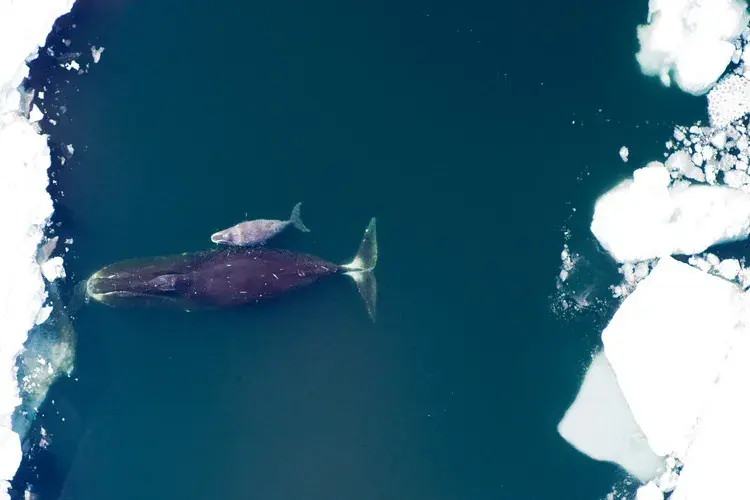
In autumn, salmon run up the rivers, feeding grizzlies, eagles, and other wildlife. Scientists call ANWR a complete, intact Arctic ecosystem. Its abundance has led Alaska’s senior US senator to describe it as a “literal breadbasket” for the millions of waterfowl that depend on it each summer.
Both scientists and local residents see it as a living blueprint for how nature sustains itself, a functioning Arctic world that has remained intact for millennia.
Sacred ground for Indigenous Peoples
Much more than an ecological treasure, this land is also a cultural one. For the Gwich’in Athabascan people of interior Alaska and northwestern Canada, the coastal plain of ANWR is sacred.

Opening this refuge would destroy deep cultural and spiritual connections.
For decades, Gwich’in leaders have resisted oil development. Long before oil exploration, this land provided food, shelter, and materials for their ancestors over thousands of years. To them, the Refuge is heritage, community, and survival. It is family.
“Drill, baby, drill” returns
All of this is now at risk. In a flurry of actions in autumn 2025, the Trump administration moved to undo decades of protection for ANWR. On October 23, Interior Secretary Doug Burgum announced rules to “open the entire coastal plain” to oil and gas leasing. This fulfills Trump’s long-standing promise: his own tax-and-spending package called for at least four lease sales over a decade in the refuge.
In fact, the 2017 tax overhaul was the first time Congress authorized drilling here, in exchange for corporate tax cuts. The new rules cancel Biden-era lease cancellations and halt a court-ordered environmental review, fully restoring and speeding up the Arctic drilling program.
The White House also issued a new executive order to “unleash Alaska’s extraordinary resource potential,” essentially telling federal agencies to push forward with every oil and gas project in the state. On the ground, that translates into highways, pipelines, and drill rigs aimed directly at the coastal plain.
The new plan paves the way for future lease sales, exactly what Trump promised his supporters. In this administration’s language, the Refuge is no longer a sanctuary; it’s just another resource to exploit.
Who stands to gain: Big oil and political allies
The winners here are obvious: the oil and gas companies that have long lobbied for ANWR development. ConocoPhillips, the company behind Alaska’s controversial Willow oil project, is positioned to benefit.

They’ve already applied to expand ice roads and drill pads further west, beyond their current leases. Looser rules in ANWR give them a green light to move deeper into untouched terrain.
Other major players, like ExxonMobil, Chevron, and Occidental, are largely on the sidelines for now, sometimes signaling to investors that ANWR drilling isn’t a top priority. Chevron and smaller producers like Hilcorp even paid to terminate old federal Arctic leases, suggesting the financial risks outweigh potential gains.
Still, the policy is a clear win for the broader fossil fuel agenda. Conservationists call it “a giveaway to the oil and gas industry”, a giveaway that also aligns with political allies and campaign donors. Alaska’s state interests, including the state-owned Alaska Industrial Development and Export Authority (AIDEA), hold key leases from past sales, ready for development. And politicians pushing these policies have deep ties to oil donors. This is “drill, baby, drill” in action.
Yet even Wall Street isn’t fully on board. Major US banks (like Goldman Sachs and Morgan Stanley) have publicly refused to finance drilling in ANWR, and more than twenty insurance companies (including AXA, Munich Re, Zurich and Allianz) have policies against underwriting Arctic oil projects.
Without money, drilling stalls, which is why we have launched our campaign “Hands Off the Arctic”, now urging banks to cut funding and stop the oil rush before it begins.
Why we don’t need more oil
This needs to be clear: the world does not need the oil hidden under ANWR.
Climate science tells us the opposite: we need to stop finding new oil entirely.
The Intergovernmental Panel on Climate Change agrees: continuing to expand fossil fuel infrastructure would push temperatures past critical limits. Put simply: the oil we’re already burning is enough to heat the planet.
Any new drilling is a climate gamble we cannot afford.
At the same time, clean energy is growing faster than ever. Renewable power is surging and Arctic oil becomes almost irrelevant.
Even if ANWR’s oil were produced, it might never be burned, or only at great cost to consumers and the planet. Yet drilling comes with extreme costs.
The climate impact alone would be enormous. Extracting oil releases greenhouse gases both from production and eventual combustion, and the Arctic is already warming three to five times faster than the global average. That accelerated warming drives storms, erosion, and permafrost thaw, threatening coastal communities and wildlife alike.
Every barrel pulled from ANWR accelerates this feedback loop, worsening wildfires, floods, and ice loss. The irony is stark: these pristine lands actually help stabilize the Arctic.
The environmental risks are just as severe. ANWR’s tundra and wetlands are fragile. Even heavy machinery used for exploration can rip up vegetation and destroy permafrost, leaving scars that last decades.
A single major spill would be catastrophic. Oil coats animal fur and feathers, destroys insulation and buoyancy, and poisons entire food webs. Decades after the Exxon Valdez disaster in 1989, oil still lingers in Alaska’s ecosystem, and that spill was small compared to what could happen in the stormy, ice-choked waters of the refuge.
A spill here could kill millions of birds and marine mammals in a single season, far beyond anything cleanup crews could handle.
The lesson is clear. Global climate data, combined with local experience, sends one urgent message: we cannot open new oil frontiers. Drilling in ANWR would burn through the carbon budget faster, destroy one of the last intact Arctic ecosystems, and gamble away a refuge that has stood for millennia.
The battle ahead: Hands Off the Arctic
The fate of the Arctic Refuge is on the line, and people are mobilizing to defend it. Even the business world is showing caution: financing new ANWR drilling will not be easy.
You can help turn the tide.
What YOU can do
Share this story. Most people have no idea what’s happening in the Arctic Refuge. Awareness is our first weapon. Share this exposé, talk about it, and make noise.
Add your voice. Join the second phase of our campaign, Hands Off the Arctic, and demand that banks stop financing this destruction. When people speak up, money moves.
Take two minutes to contact every bank we target. Your voice can make a huge difference.
Support our work. Help us keep exposing ocean crimes and defending fragile ecosystems. By donating, you’re funding future campaigns and investigations around the world.
ANWR is more than just land; it’s a test. Sacrificing it for a few barrels of oil would mean abandoning any claim to responsible stewardship. Protecting it, however, is a chance to reaffirm that progress should not come at the expense of life itself. The planet needs places like the Arctic Refuge: intact, thriving, and protected.
The choice is ours.


kèo bóng đá mình thấy bạn bè nói hoài nên cũng bấm vô coi thử cho biết. Mình không có ngồi đọc kỹ hay làm gì nhiều, chỉ lướt qua xem giao diện họ làm ra sao thôi. Cảm giác đầu tiên là trang nhìn khá sáng sủa, khoảng trắng vừa đủ nên không bị bí, kéo xuống cũng đỡ mỏi mắt. Mình để ý họ chia thông tin theo từng khối rõ ràng, kiểu nhìn cái là biết đoạn này đang nói về gì, không phải đoán. Thanh menu đặt khá dễ thấy nên chuyển qua lại cũng nhanh, không cần bấm vòng vo. Nói chung lướt tầm vài phút là quen tay vì các mục được gom gọn…
GG88 mình mới ghé thử vì thấy bạn bè nhắc hoài, kiểu vào xem giao diện có dễ dùng không thôi. Vừa mở ra là thấy họ chia nội dung theo từng khối nhìn khá “sạch”, không bị dồn chữ một cục nên lướt nhanh vẫn hiểu đang nói đoạn nào. Mình để ý mấy chỗ họ nhấn số liệu như “10 triệu thành viên” với tỷ lệ quay lại, đặt nổi bật nên không cần đọc kỹ vẫn nắm được ý. Menu cũng nằm chỗ dễ thấy, bấm qua lại mấy mục giới thiệu với phần hành trình phát triển khá trơn tru, không bị rối. Nói chung cảm giác họ sắp xếp thông tin có đầu có đuôi,…
kubet mình mới lướt thử vì thấy bạn bè nhắc hoài, chủ yếu tò mò xem giao diện thế nào chứ không có ý tìm hiểu sâu. Vừa vào cái là thấy bố cục khá dễ chịu, mấy phần được chia rõ ràng nên nhìn một cái biết mình đang ở mục nào, không bị loạn mắt. Mình cũng để ý cái menu đặt khá dễ thấy, bấm qua lại vài chỗ là tới ngay, không phải kéo lên kéo xuống tìm hoài. Với kiểu trình bày thông tin theo khối nhìn gọn, chữ không bị dồn cục nên lướt nhanh vẫn nắm được ý chính. Nói chung cảm giác dùng ổn, kiểu nhẹ nhàng chứ không rối, nhất là…
The quality of this article really impressed me. Instead of only covering the basics, it explains piso wifi with practical insights that make the topic much clearer. It's always encouraging to find content that is informative, well organized, and written with readers in mind. Thanks for sharing this excellent guide.
ALO789 mình mới ghé thử vì thấy bạn bè nhắc, kiểu tò mò xem trang trông ra sao thôi chứ không ngồi khám phá kỹ. Vừa vào là thấy giao diện khá dễ thở, không bị nhồi chữ hay màu mè quá nên lướt một vòng cũng nhẹ đầu. Mình để ý họ chia nội dung thành mấy khối nhìn rõ ràng, kéo xuống là biết đang ở phần nào chứ không bị rối. Cái mình thích là cách họ trình bày thông tin theo dạng bảng cột gọn gàng, nhìn cái là nắm được ý chính, không cần đọc dài dòng. Thanh menu cũng đặt chỗ dễ thấy nên bấm qua lại nhanh, không phải tìm. Nói chung trải…