Aquariums and dolphinariums are prisons. We are exposing the tanks.
- Helena Constela
- Jan 30
- 8 min read

How Aquariums and Dolphinariums Impact Dolphins, Orcas, and Marine Ecosystems
In recent weeks the horror behind marine “theme parks” has been laid bare. Eleven-year-old Kamea has died at SeaWorld San Antonio, the 45th (!!!) orca to die under SeaWorld’s watch.
And in Florida, a viral video showed a protected giant manta ray being hauled out of the Gulf of Mexico. State officials later confirmed the manta was captured under a special permit to supply SeaWorld’s park in Abu Dhabi.
Despite glossy marketing, these parks are powered by a brutal business model: wild animals are kidnapped and bred in tanks, forced to perform, and often die young and broken.
The trade in trapped marine life
For decades dolphinaria and aquariums have relied on capturing wild cetaceans because true captive breeding can’t meet demand.
Today the slaughter continues, not just of dolphins and orcas but other species, too. In July 2025 the Florida company Dynasty Marine Associates Inc (self-promoted in their website as able to “supply the highest quality Florida and Caribbean marine livestock that is available”) was caught dragging a giant endangered manta ray aboard a boat, noosed through the water.
This one animal will now languish in a concrete tank for profit. Florida’s wildlife commission later admitted the manta’s capture was allowed by a “Marine Special Activity License”, essentially a one‑off permit for “education, exhibition or research”.
In other words, the law meant to protect ocean giants is twisted into a loophole to supply these parks.
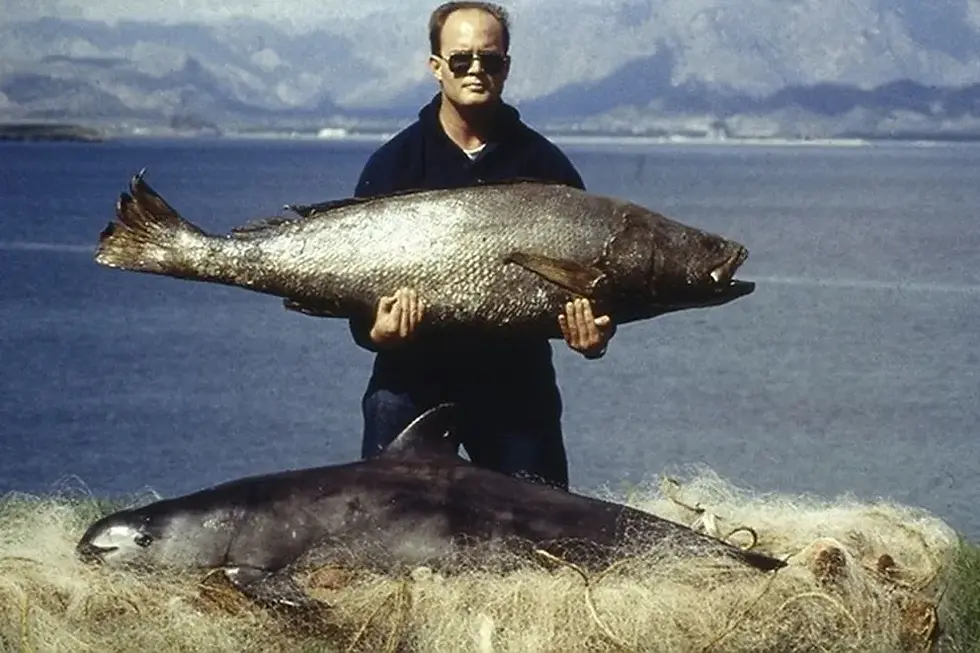
The methods are chilling. Captures are often violent – drive nets, cages and even explosives are used in the open sea – and many whales or dolphins are injured or killed trying to escape. A study by the Animal Welfare Institute notes that 70% of all dolphins die either during or soon after capture for aquariums.

SeaWorld’s own history is stained by such hunts: in the 1960s and ‘70s it helped break up Pacific Northwest orca pods, taking dozens of whales from the endangered Southern Resident community.
Those trauma-ridden captures devastated that population. Many of the captured calves died en route, and the survivors never saw their families again. Today those same pods hover on the edge of extinction.
SeaWorld and its peers preach “conservation” while fueling this misery. They are profiteers, dressing up animal exploitation as education.
These tanks are prisons for cetaceans
To some people it looks like a show, but to a whale it’s a life sentence. Killer whales evolved to roam the open ocean up to 40 miles a day. A pod can travel hundreds of miles in a single week. In captivity they are confined to tiny concrete tanks and made to circle endlessly. Year after year the toll is visible: Kamea, the orca who just died, was only 11. In the wild she might have lived 50–80 years.
A National Geographic exposé notes that “Seventy orcas have been born in captivity since 1977 (including 30 stillborn); none born in captivity has lived past 30 years of age.”
It isn’t only for lack of care, it’s the nature of their imprisonment.
The symptoms of captivity are horrific. Untold whales and dolphins develop chronic illnesses, endless stress, and self-destructive behaviors. More than 70% of captive orcas have damaged teeth from gnawing on steel walls. Trainers describe “dolphin-on-dolphin aggression” in tight tanks, with dolphins biting and raking each other.

Fins that stand proudly erect in the wild collapse in captivity (almost all of the captive orcas get dorsal fin collapse). The vast majority of captive adult male orcas have collapsed dorsal fins, compared to the very low percentage observed in wild populations.
Heartbreaking videos of orcas banging their heads or swimming in circles have become all too common.

Even SeaWorld’s own incidents reveal the cruelty. In December 2024 the US Department of Agriculture cited SeaWorld Orlando after finding a dolphin “actively bleeding” from deep rake marks and waterway chlorine levels far above standards.
And trainers have not been spared: the film Blackfish documented how captive orcas, deprived of everything natural to them, eventually lash out. A dozen captive orcas have injured or killed handlers, whereas no wild whale has ever killed a human.
Despite SeaWorld’s PR blitz about conservation, the captive whales and dolphins tell the real story, one of shattered lives and premature deaths.
These companies spend millions on marketing themselves as educational and conservation-driven. SeaWorld, for instance, brands its shows as "natural behaviours" and promotes itself as a key player in marine rescue and research.
In reality, much less than 0.5% of SeaWorld’s revenue goes toward conservation or rehabilitation. The bulk of public-facing claims about rescue and education serve as greenwashing, masking the fact that only a tiny fraction of revenue directly supports the vast numbers of orcas and dolphins imprisoned for entertainment. On top of that, most rescued animals are not whales or dolphins but manatees, sea turtles, or birds, species that pose no commercial threat.
Educational claims are also misleading. The version of cetacean behaviour seen in tanks (flips, spins, tail-walks…) are nothing to be found in the wild. Instead, they are trained responses for food, not enrichment.
Meanwhile, actual marine scientists and conservationists overwhelmingly condemn cetacean captivity. More than 800 experts signed a 2023 open letter calling for the complete phase-out of captive cetaceans.
The global marine circus
SeaWorld may be the biggest name, but the problem is worldwide. Across the globe every continent is racing to build bigger, flashier aquariums to attract tourists. Today 54 orcas are held in captivity spread across 14 facilities worldwide. Out of these 54 animals, a total of 22 were captured (39%), 33 (58%) were born in human care. The remaining two animals (3%) were the result of stranding or rescue efforts where individuals were deemed non-releaseable.
Chinese parks hold 24 captive orcas. The United States follows with 17 orcas at three SeaWorld parks in Orlando, San Antonio, and San Diego. Japan has seven orcas in its aquariums, Spain’s Loro Parque has four, Marineland Antibes in France holds 2, and Argentina and Russia each have one.
The expansions never stop. In 2023 SeaWorld opened its first Middle East park on Abu Dhabi’s Yas Island. It famously has no orcas (the company halted breeding in 2016 and the climate is too hot), yet it is a $1.2 billion complex with the world’s largest indoor aquarium. It houses dozens of dolphins, seals and rays (soon to also have the giant manta ray they’ve just taken in Florida), every bit as wild as any orca and just as unsuited to tanks.
Other companies are following suit: new parks are planned or under construction all over the world. Meanwhile, places that once thrived on orca shows are now shutting down. In France, Marineland Antibes announced its closure in 2025 after attendance collapsed and two of its orcas died within months.
It’s a global gold rush for marine attractions. Every country wants its dazzling water parade, even if it means hollowing out wild populations elsewhere.
The irony is bitter: many of these governments publicly champion conservation, yet they’re bankrolling a business that actively destroys marine life.
Thankfully though, popular opinion is quickly turning against it. A US poll in 2014 showed 50% of Americans oppose keeping orcas in tanks (only 21% in favor), an increase from earlier years. 72% of those polled said they would still visit zoos and aquariums if orca shows were stopped…
Forced breeding: The global sperm trade
When breeding stopped being acceptable in the eyes of the public, SeaWorld simply moved the operation behind closed doors. And the orcas weren’t asked, they were violated.
Captive orcas are often subjected to forced sperm extraction, a procedure that involves restraining a male orca while his semen is collected manually. One of the most disturbing examples is Kshamenk, the lone male orca held at Mundo Marino in Argentina.
Although he is kept in isolation in a substandard tank, his genetic material is considered valuable. Semen from Kshamenk has been extracted and sold to parks around the world, including SeaWorld, to artificially inseminate captive females and maintain genetic variety. Not for conservation, but to keep the show going.
This practice is not just inhumane, it’s big business. Each insemination attempt can be worth hundreds of thousands of dollars, with multiple rounds often needed. Despite its disturbing nature, the procedure is considered standard in the industry. The public is rarely made aware that behind every newborn calf is an act of reproductive coercion and corporate profiteering.
In captivity, female orcas have been inseminated as early as age 8, far earlier than their wild counterparts. These animals are repeatedly used as breeders, often separated from their offspring prematurely, leading to well-documented cases of maternal grief and aggression. It's a cycle of biological exploitation masquerading as conservation.
Lobbying, laws and legal gymnastics: captivity’s permit to play
Contrary to SeaWorld’s friendly image, the regulatory framework is rife with loopholes. The US Marine Mammal Protection Act of 1972 banned indiscriminate captures, but explicitly allows permits for “public display.”
SeaWorld once used those permits to amass its orca collection. The Florida authorities’ response to the manta video was telling: although removing a manta ray is generally illegal, officials admitted the boaters had obtained a Marine Special Activity License for a manta, exempting them from fishing rules.
Florida effectively licensed that manta’s kidnapping for “education” at a theme park.
Worldwide, the picture is similar. Endangered species like whales and manta rays are covered by CITES and other treaties, yet enforcement is virtually nonexistent for entertainment trade. Dealers routinely skirt regulations, labeling animals captive-bred or faking health certificates.
Let’s point out the hypocrisy: SeaWorld touts conservation while it actively imports ever more wild animals. Only a few nations have tried to close the loopholes, but as long as lucrative tourism dollars flow, governments will turn a blind eye and sign more permit exemptions.
They also love to silence whistleblowers: Dozens of former trainers, veterinarians, and employees have come forward with evidence of mistreatment. Many of them signed non-disclosure agreements (NDAs) with severe penalties. In some cases, whistleblowers have faced lawsuits or smear campaigns.
In 2016, SeaWorld was forced to admit, after internal emails were leaked, that it had made employees spy on animal rights groups to gather intel, discredit campaigns, and preempt protests.
Once again: The ocean is not ours!
This isn’t just a local issue, it’s an existential one. The ocean is the planet’s life-support system, and removing its apex creatures has ripple effects. Whales and rays play vital ecological roles: their feeding and even their fertilizer-rich waste boost plankton that produce much of our oxygen and sequester carbon.
Studies found that 12,000 sperm whales help capture 200,000 tonnes of CO₂ each year by sustaining phytoplankton blooms. Every captive whale is one less ally in the fight against the climate crisis.
It’s time to wake up: by treating the ocean like a petting zoo, we risk undermining the very systems that sustain us. Experts worldwide have called for an immediate pause on taking marine animals from the wild. Over 800 marine scientists and defenders have warned that exploiting ocean life is “irreversible” madness for our climate and biodiversity. More than 37 governments have urged caution on new marine parks.
Yet SeaWorld and others keep pushing ahead, banking on public ignorance.
We cannot afford to treat whales, dolphins, manta rays and other marine creatures as mere exhibits or resources. Once we tear their world apart, it won’t come back.
What you can do
Spread the word. Awareness is always the first step! Speak truth to power. Share this exposé widely (email it, share it on instagram, post it wherever you can) so the public knows the truth behind the smiling posters. Tag SeaWorld sponsors and partners.
Pressure media outlets and influencers not to promote shows of captive marine life.
Boycott marine parks. Make a personal pledge to never buy tickets to SeaWorld, Loro Parque, or any facility that keeps whales, dolphins, sharks or rays for shows. If enough people stop giving money to these parks, the industry will crumble.
Tell your representatives. Contact local and national lawmakers and urge them to ban cetacean captivity or strengthen wildlife protection laws. Point out how many countries (like recently Mexico) have already outlawed these practices.
Push for transparency: wildlife permits should not be rubber-stamped to entertainment venues.
Choose ethical alternatives. Demand that children’s entertainment and science centers invest in virtual reality or meet-and-greets (with plushies, not live creatures) rather than live-animal exhibitions. Encourage film and TV makers to highlight wild nature, not aquarium antics.
The ocean is not a playground, it’s our lifeblood.
No matter how glittering the facade, marine parks like SeaWorld trade on the suffering of highly intelligent, social animals. In our lifetimes we owe it to ourselves and to the planet to end this cruelty. Don’t sit quietly on the sidelines.
Aquariums and dolphinariums are prisons. Talk about it. Continue exposing the tanks.
Boycott those tanks.
Support the wild.


Trong lúc đánh giá trải nghiệm giao diện của các cổng giải trí trực tuyến, mình thấy 123b có sự chú trọng đến khả năng sắp xếp thông tin. Những nhóm nội dung như xổ số, bắn cá, slot game và casino được phân loại riêng để người dùng dễ dàng tiếp cận. Thiết kế tổng thể hướng đến sự rõ ràng, không tập trung quá nhiều yếu tố trên cùng một khu vực. Nhờ cách trình bày hợp lý, người dùng có thể nhanh chóng xác định vị trí chuyên mục cần tìm, giảm thời gian thao tác và thuận tiện hơn khi chuyển đổi giữa các tính năng trong hệ thống
Trong quá trình mình sử dụng mm88.today để quan sát tổng thể trải nghiệm, mình nhận thấy nền tảng có cách xây dựng giao diện hướng đến sự đơn giản và thuận tiện. Các khu vực chính được sắp xếp riêng biệt giúp người dùng nhanh chóng nhận biết nội dung cần tìm. Theo mình, cách tổ chức này giúp giảm sự rối mắt và tạo cảm giác dễ sử dụng hơn trong thời gian dài. Casino live được bố trí rõ ràng, bên cạnh đó game bài cũng được trình bày khá cân đối. Mình đánh giá việc phân chia hợp lý giúp quá trình điều hướng trở nên nhẹ nhàng hơn. Khi trải nghiệm thực tế, hệ thống phản…
Khi mình thử tìm hiểu trang chủ s8 dưới góc nhìn của người dùng mới, mình nhận thấy nền tảng có cách tiếp cận khá dễ dàng. Mình thấy các danh mục như ưu đãi, nổ hũ, game bài và thể thao được bố trí rõ ràng, giúp mình nhanh chóng làm quen với bố cục tổng thể. Việc phân nhóm nội dung hợp lý khiến mình ít bị phân tâm khi có nhiều lựa chọn khác nhau. Sau quá trình trải nghiệm, mình đánh giá hệ thống có khả năng xử lý tốt, tốc độ tải ổn định và giúp việc chuyển đổi giữa các khu vực trở nên thuận tiện hơn
Trong lúc mình so sánh nhiều nền tảng khác nhau, s8 để lại cho mình ấn tượng tốt ở phần điều hướng. Các khu vực như xổ số, bắn cá, thể thao và game bài được sắp xếp theo nhóm rõ ràng nên mình chỉ cần nhìn là có thể nhận ra vị trí mong muốn. Mình đánh giá cao việc giao diện không bị nhồi quá nhiều thông tin, nhờ vậy quá trình sử dụng khá thoáng và dễ nắm bắt. Khi trải nghiệm bắn cá và xổ số, mình thấy tốc độ phản hồi tương đối ổn định, việc chuyển chuyên mục diễn ra mượt và rất tiện
Khi trải nghiệm UU88 trong nhiều khung thời gian, mình nhận thấy nền tảng giữ được sự ổn định tương đối ở phần bố cục. Các chuyên mục được sắp xếp theo nhóm rõ ràng, nhờ đó việc xác định nội dung cần tìm trở nên thuận tiện hơn. Mình thấy giao diện không đưa quá nhiều thông tin vào cùng một khu vực nên theo dõi lâu vẫn khá thoải mái. Trong quá trình thử casino trực tuyến và bắn cá, tốc độ tải duy trì ổn định, phản hồi thao tác khá nhanh và chuyển đổi giữa các sảnh diễn ra mượt. Tổng thể tạo cảm giác dễ làm quen mà không cần nhiều thời gian tìm hiểu.